
Learning from Lloyd
Blankfein, Goldman and the Next Market Reckoning
Last time I met Lloyd Blankfein was ten years ago, in February 2016. He’d been chairman and chief executive officer of Goldman Sachs for a decade by then, having navigated the firm through the financial crisis. Market conditions weren’t as bad as they had been during the crisis, but they weren’t exactly good either. Outside our meeting room, on the edges of a conference in Miami, the stock market was selling off, the oil price was collapsing and credit spreads were widening. “It isn’t the easiest environment,” he conceded.
In particular, Blankfein was worried about a doom-loop of forced selling. With oil trading 70% below its average price of the prior few years and Iranian supply coming on-stream to push it even lower, energy companies faced acute pressure. Fears of defaults led to a widening of credit spreads which spilled into other sectors. Compared with where they sat 18 months earlier, US high yield spreads had more than doubled, reaching levels not seen since the European debt crisis of 2011. All this after a period of ultra-low interest rates and ample liquidity.
“Higher risk, less liquidity, hard to get out of certain positions,” Blankfein said. “And that feeds upon itself. Sometimes positions are easier to put on than to take off.”
Goldman came out of it fine. After printing its lowest quarterly revenue since 2011, profits swiftly rebounded. So fleeting was it that the period doesn’t even merit a mention in Blankfein’s new memoir (much less his meeting with me).
But the episode highlights Blankfein’s grasp of market dynamics and how to manage a business through them. “Cycles can last a long time, and you can be very severely hurt in a cycle if you don’t respond,” he told me.
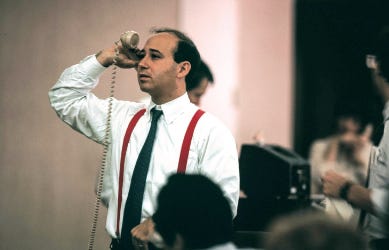
Sadly, his book comes out too late for the managers of Blue Owl and others who have grown aggressively in private credit. On his marketing tour, Blankfein sounds the alarm. He thinks markets are due a reckoning and identifies private credit as a possible source. “Horses are starting to whinny in the corral,” he told one interviewer, reprising an image he uses in the book to describe the events in summer 2007 that presaged the financial crisis.
He’s smarting, of course – he recognises that private credit and private equity financiers have usurped him as kings of Wall Street. There were four of us in that meeting room in Miami. One, his chief financial officer, went off to become CEO of Carlyle; the other, his head of investor relations, became chief administrative officer at KKR. In his book, Blankfein acknowledges the flow of talent to firms like these – though he warns that their recruiting advantage will last only until the next crisis, “when the younger institutions will come under the yoke of regulation and the next generation of unregulated financial firms begins its rise.”1
Still, there’s a lot in the book for his former colleagues to digest. Blankfein talks about the mark-to-market “theology” that was core to Goldman’s risk management framework. When dedicated risk controllers came up with marks that were in conflict with what traders thought they should be on illiquid securities, management always sided with the control people. Contrast that with the opaque, sometimes inconsistent marks that exist in private credit. We’ve spoken about private credit vehicles like Ares Capital Corporation (ARCC) and FS KKR Capital Corp (FSK) here before. Last week, a similar vehicle, BlackRock TCP Capital Corp (TCPC), wrote down the value of one of its holdings to zero from 100 cents on the dollar three months earlier. What would the Goldman risk controllers have made of that?23
Blankfein also highlights the elevation of reputational risk as a key focus. In August 2007, he saw that losses were beginning to show in a hedge fund managed out of his asset management business. In order to handle redemptions, he decided to put more money in. The firm ended up investing $2 billion of its own capital and raising an additional $1 billion from independent investors. It’s a tactic Blackstone has cloned, first in its private property fund, BREIT, when it brought in University of California money to help out; more recently in its private credit fund, BCRED, when the firm and employees put more money in. In neither Goldman’s nor Blackstone’s case was there an obligation but, as Blankfein notes, it’s not a good look to be high-fiving your way through a record year at the parent company while investors struggle.4
He doesn’t dwell on it in the book, but there’s another risk in private credit his experience attunes him to: expansion into retail. Goldman was traditionally wary of expanding too much into consumer segments. On his marketing tour, Blankfein explains why. “The government sector cares, but not that much, if institutional investors lose money – they’re smart, they can afford it… But when you lose money for individuals, for consumers, i.e. taxpayers and citizens, people in government get very, very upset; regulators get very, very upset.” He views the risks in private credit as less about the assets themselves than where they’re ending up, and wonders why private credit firms that have already done so well in institutional segments would take on that risk at this point in the cycle.5
Of course, his successor, David Solomon, may disagree. Goldman itself is now a large private assets firm, managing $420 billion of third-party alternative investments. Indeed, Goldman has changed a lot since Blankfein retired in 2018. Fittingly, days before his memoir appeared, the firm’s latest 10-K dropped – telling its own story of where things stand today. To dig into those changes and explore how Goldman Sachs is positioned – as well as to test Blankfein’s hypothesis that if Goldman Sachs appears in a headline, an article gets a multiple of the number of clicks it would get without a mention of Goldman – read on.