
Revolut Unbound
The Quest to Build the World’s First Truly Global Bank
Ten years ago, I was meeting with a prominent angel investor when he beckoned me round the table to see what he’d pulled up on his laptop. He was excited about his latest investment – a company barely a year old, launched to tackle a pain point familiar to travellers the world over: “spending and sending money abroad sucks”. On the screen was an internal company dashboard and, as we watched, customer engagement metrics were ticking up. He described the product and explained how his daughter was using it on a trip to Spain that week – a card, linked to an app, that allowed her to spend in euros without incurring foreign exchange fees. The dashboard suggested that many were doing the same.
An experienced investor, he’d done his due diligence. Among his calls was one to a senior executive of Visa. The company would never be able to maintain a competitive advantage, the exec told him. The big players would copy whatever it built. Encouraged by his own experience of the product – and his daughter’s – he ignored the advice and wrote a cheque in the company’s seed round, becoming a 3.3% shareholder.
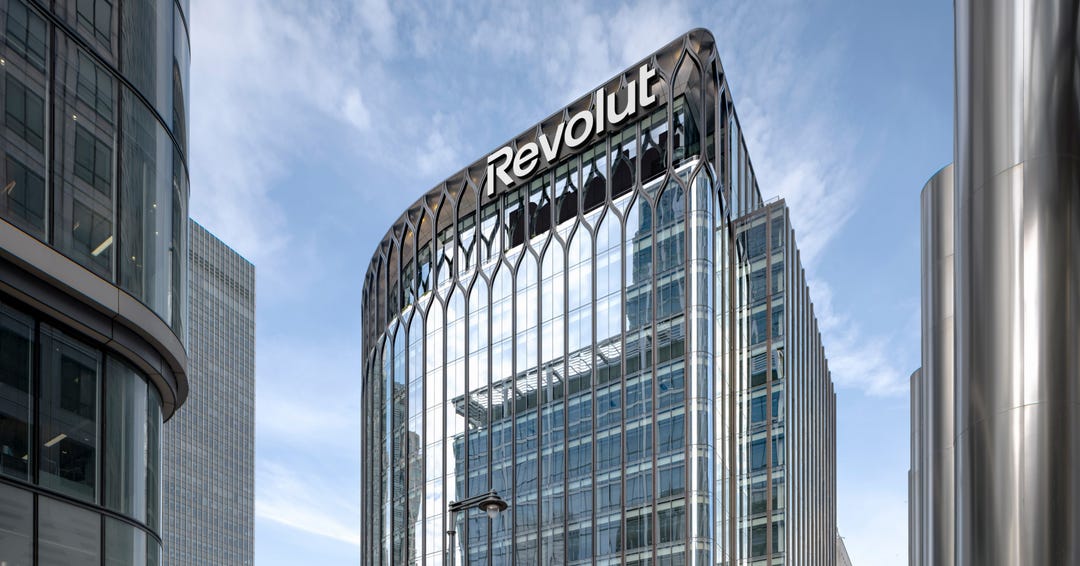
Today, Revolut does much more than free currency exchange. Its product range spans savings, lending, investing and trading, business banking, eSIMs, travel booking and more. It has 70 million customers across 39 countries – up from around 150,000 at the time of that meeting, when it operated in the UK alone. Full-year results released this week show gross revenue of $6.0 billion and net income of $1.7 billion – numbers its founder and CEO Nik Storonsky reckons will grow by at least 50% this year. With a valuation of $75 billion, determined by a secondary share sale last November, Revolut is already worth more than many established banks.1
Not bad for an angel investment.
Ten years on, any scepticism shared by incumbents has vanished:
“We do observe Revolut very carefully,” said the CEO of BNP Paribas in Poland in December. “This is the most successful neo financial institution in history, and they will have their place in the landscape.”
“When you have strong, highly competitive new entrants in the market, you have to pay attention,” said the CEO of Société Générale on his third quarter earnings call.
“Our competition is all back. Wells Fargo is back, Bank of America is back, Goldman Sachs, Morgan Stanley. But we also have Citadel, fintech, Revolut, and that – so we are conscious of that,” said Jamie Dimon in May.
Even Visa has come around. Revolut recently partnered with Visa to launch a premium business card. “Titan for Revolut is a really cool win for us,” the company’s Chief Product and Strategy Officer said this month.
Since my peek inside the dashboard, I have been a happy Revolut user. I signed up immediately after leaving that meeting and – as the app still records – spent £6,438 on my travels through the remainder of that year. As an early user, I also got the opportunity to invest a small amount in the series A.
I’ve written about the company before – in Revolution in the Air in 2020 and Britain’s Newest Bank in 2024 – but, with results just released and a shiny new bank license in the bag, it warrants a fresh look. To dig into the numbers and explore what they say about Revolut’s competitive positioning, read on.